Author: Ellie Batten

  • Eating Disorder Awareness Week: When Eating Becomes a Way of Coping

    Eating Disorder Awareness Week: When Eating Becomes a Way of Coping

    Eating can gradually become a way of coping with stress, burnout, trauma, or emotional overload. Disordered eating doesn’t always meet the criteria for an eating disorder, but it can still feel distressing and difficult to manage.

    Comfort eating is a common and understandable form of emotional regulation, often rooted in memory and early experiences of care. It becomes a concern when food feels like the only coping strategy, or when eating is followed by shame, guilt, restriction, or loss of control.

    If eating feels emotionally loaded, secretive, or stressful, that matters — even if your weight hasn’t changed. More severe symptoms, significant restriction, purging, rapid weight loss, or physical risk require specialist support.

    You don’t need a diagnosis or to be underweight to deserve help.

    Multiple wooden spoons of different colours

    Eating Disorder Awareness Week encourages us to talk openly about eating difficulties, not only diagnosed eating disorders, but also the quieter, less visible ways people struggle with food.

    For many people, eating changes during periods of stress, burnout, trauma, or emotional overload. It can slowly shift from being about hunger and nourishment to being about coping. These changes are often confusing and easy to dismiss, especially if they don’t fit what we imagine an eating disorder looks like.

    This article is written for people who may be experiencing disordered eating or comfort eating, and who are wondering whether their relationship with food is still supporting them — or beginning to feel difficult.

    Disordered eating and eating disorders are related, but they are not the same.

    Disordered eating refers to patterns of eating that feel distressing, emotionally driven, or hard to manage, but that don’t meet diagnostic criteria for an eating disorder. These patterns are common, especially during periods of stress, and often develop as ways of coping.

    Eating disorders, such as anorexia nervosa or bulimia nervosa, are serious mental health conditions that involve significant medical and psychological risk and require specialist treatment.

    Disordered eating can exist without becoming an eating disorder, and many people experience it at some point in their lives.
    It still deserves attention and care, even if it doesn’t come with a diagnosis.

    Disordered eating sits on a spectrum. It may include experiences such as:

    • Eating in response to stress, anxiety, or emotional discomfort
    • Using food to soothe, numb, or distract
    • Skipping meals unintentionally or deliberately
    • Feeling out of control around food
    • Eating past fullness and feeling guilt or shame afterwards
    • Rigid food rules or “good/bad” thinking
    • Feeling disconnected from hunger or fullness cues

    These patterns often develop gradually, and many people live with them for years without naming them as disordered, particularly if their weight or appearance hasn’t changed.

    Comfort eating is one of the most common, and most misunderstood, coping strategies.

    Food can offer:

    • Sensory grounding
    • Familiarity and predictability
    • Emotional soothing
    • Relief when things feel overwhelming

    For people who are emotionally overloaded or exhausted, eating can become one of the most accessible ways to regulate.

    The difficulty usually isn’t comfort eating itself. It tends to arise when food becomes the only coping strategy available, or when eating is followed by intense self-criticism, shame, or attempts to compensate.

    Comfort eating is rarely random.

    Many of us reach for foods that are deeply familiar, often the same foods we were given as children when we were ill, upset, tired, or in need of care. Soft textures. Warm meals. Foods that required little effort or decision-making.

    If you notice that when you’re struggling, you gravitate towards these foods, that isn’t a lack of control. It’s memory.

    Food is one of the earliest ways many of us experienced care. Over time, the body learns to associate certain foods with safety and reassurance. When life feels overwhelming, your nervous system may reach back to what once helped, not because you’re failing, but because you’re trying to feel safe.

    Disordered eating is often noticed not because of what someone eats, but because of how it feels.

    You might recognise experiences such as:

    • Eating on autopilot
    • Feeling disconnected while eating
    • Hiding eating habits or eating in secret
    • Cycling between comfort eating and restriction
    • Feeling anxious, guilty, or ashamed around food
    • Feeling preoccupied with eating or not eating

    If eating has become emotionally loaded or stressful, that matters — even if you appear “fine” from the outside.

    Periods of stress and burnout commonly affect eating. Appetite can fluctuate, routines fall away, and food becomes either harder to manage or more relied upon.

    This is especially common for people who are:

    • Living with chronic stress
    • Neurodivergent
    • Emotionally overextended
    • Managing trauma or grief
    • Carrying multiple responsibilities with limited support

    In these contexts, eating patterns are often less about food itself and more about coping capacity.

    In the therapy room, disordered eating and comfort eating rarely arrive on their own.

    People often come wanting to talk about stress, exhaustion, relationships, burnout, or feeling disconnected from themselves.
    Food enters the conversation gradually, sometimes with embarrassment or apology. What we often see is not a problem with food, but a person who has been coping for a long time.

    Eating becomes a place where everything that hasn’t had space elsewhere finally lands: overwhelm, unmet needs, grief, depression, loneliness, or pressure. For many, therapy is the first place these patterns are spoken about without judgement or pressure to change.

    When eating difficulties are present, accessing support can feel daunting.

    Online counselling can reduce barriers such as travel, sensory overload, and the effort involved in attending appointments. For some people, being in a familiar environment makes it easier to speak openly about food, emotions, and coping patterns.

    BMI has limitations and does not reflect emotional distress or relationship with food. However, clinicians do use it as one indicator of physical safety.

    In adults:

    • A BMI below 18.5 is considered underweight
    • A BMI around 17 or below usually prompts concern and referral to specialist eating disorder services
    • A BMI below 15 is widely recognised as medically dangerous and often requires urgent specialist care

    These numbers are not measures of worth or severity, they are used solely to assess physical risk and determine the level of care needed.

    If restriction, purging, rapid weight change, or physical symptoms such as dizziness or fainting are present, specialist support is essential. Importantly, many people with eating disorders never reach these thresholds. You don’t have to be underweight to deserve help.

    Some eating-related difficulties require specialist medical and therapeutic care, and it’s important to be clear about this.

    Eating disorders, such as anorexia nervosa and bulimia nervosa, involve significant physical and psychological risk.
    As a result, those experiencing severe symptoms of such conditions are not presentations that ACN can always support directly.

    If you are concerned that your eating difficulties may be more serious, the following UK organisations can help:

    Beat Eating Disorders
    The UK’s leading eating disorder charity, offering confidential helplines and webchat.
    https://www.beateatingdisorders.org.uk/

    SEED (Support and Empathy for Eating Disorders)
    Provides education, advocacy, and support for people affected by eating disorders.
    https://www.seedeatingdisorders.org.uk/

    A GP can also assess risk and arrange referrals to NHS eating disorder services.

    It is often a response to stress, emotional overload, or unmet needs, especially in a culture that places moral value on food and bodies.

    Eating Disorder Awareness Week is an invitation to notice these patterns with curiosity rather than judgement, and to seek support before things become harder.

    If this resonates, you’re not alone and support is available 💛

    • Eating can gradually become a coping strategy during stress, burnout, trauma, or emotional overload.
    • Disordered eating does not require a diagnosis to deserve attention or support.
    • Comfort eating is a common form of emotional regulation and often linked to memory and early experiences of care.
    • Eating becomes more concerning when it feels out of control, secretive, or is followed by shame, guilt, or restriction.
    • BMI does not measure emotional distress, but significant physical risk requires specialist support.
    • You do not need to be underweight or severely unwell to seek help.

  • Self-Love and Mental Health: Why It Matters

    Self-Love and Mental Health: Why It Matters

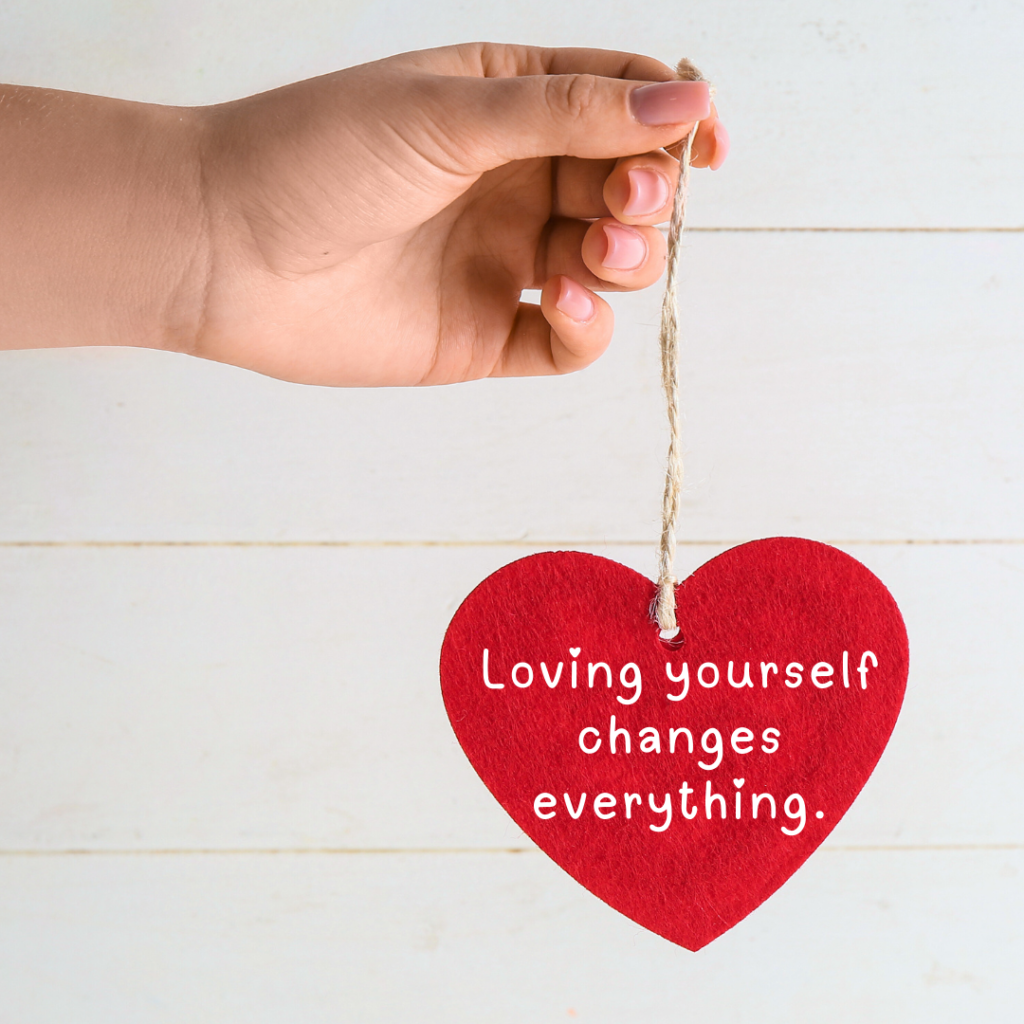
    Woman's hand holding a fabric heart that says "Loving yourself changes everything"

    In today’s fast-paced and demanding world, it’s easy to lose sight of one’s own needs. Between work commitments, family responsibilities, and societal expectations, we often prioritise everything and everyone else over ourselves. Yet, neglecting self-love can have significant consequences for our mental health.

    Self-love is not about vanity or selfishness; it’s about recognising your worth, treating yourself with kindness, and making choices that nurture your well-being. When you cultivate self-love, you build a foundation for a healthier mind and a more fulfilling life. In this blog post, we’ll explore what self-love means, why it matters for mental health, and how you can begin to embrace it.

    What Is Self-Love?

    Self-love can be defined as the practice of valuing and caring for yourself. It’s about accepting who you are, including your strengths and imperfections, and prioritising your mental, emotional, and physical well-being. Self-love involves:

    • Setting boundaries: Protecting your energy and not sacrificing your well-being to please others
    • Practising self-compassion: Being kind to yourself, especially during challenging times.
    • Acknowledging your achievements: Celebrating your successes, no matter how small they may seem.
    • Taking care of your body and mind : Ensuring you eat well, exercise, getting enough rest and having someone to talk to.

    Why Self-Love Matters for Mental Health

    1. Reduces Stress and Anxiety

    When you practice self-love, you’re more likely to set boundaries that protect you from unnecessary stress. You’re less inclined to over-commit or take on responsibilities that overwhelm you. By prioritising your well-being, you create space to recharge and manage anxiety more effectively.

    1. Improves Self-Esteem

    Self-love fosters a positive self-image. When you value yourself, you’re less likely to engage in self-criticism or compare yourself to others. This improved sense of self-worth can boost your confidence and help you navigate life with greater resilience.

    1. Enhances Relationships

    Loving yourself helps to build healthier relationships with others. Setting boundaries and communicating your needs leads to more balanced and fulfilling connections.

    When you respect and value yourself, you attract people who treat you with the same respect.

    1. Promotes Emotional Resilience

    Life is full of challenges, and self-love equips you with the tools to handle them.

    Being kind to yourself means allowing room for setbacks without turning them into self-criticism. It’s approaching challenges with curiosity and a problem-solving mindset, rather than defaulting to blame.

    1. Supports Overall Well-Being

    Self-love involves making intentional choices that support your mental, emotional, and physical health.

    That might mean building in proper rest, setting aside time to reset, or reaching out for professional support when you need it. These practical acts of care form the foundation of sustainable wellbeing.

    Hand touching a mirror to create a heart shape

    Cultivating Self-Love

    Counselling can play a meaningful role in strengthening self-worth and supporting your mental health. Professional support offers both structure and space to explore what may be getting in the way of treating yourself with care.

    Here are several ways it can make a difference:

    1. Uncovering Unhelpful Patterns

    Therapy helps you notice recurring thought patterns or core beliefs that undermine self-worth.
    With guidance, you can examine how past experiences, internalised criticism, or perfectionist standards may be shaping the way you relate to yourself, and begin to shift those patterns.

    1. Building Self-Awareness

    Counselling provides a confidential, reflective space to better understand your emotions, behaviours, and triggers. Developing this awareness clarifies your needs and values, making it easier to respond to yourself with intention rather than reactivity.

    1. Developing Healthy Coping Strategies

    A therapist can support you in building practical tools for managing stress, anxiety, and other challenges. Approaches such as grounding techniques, structured reflection, or breathwork can help you navigate difficulty with greater steadiness and self-compassion.

    1. Prioritising Self-Care

    When life feels demanding, self-care is often the first thing to be scratched off the list. Therapy can help you to focus yourself, and creating sustainable routines that protect your energy and mental health.

    1. Providing Validation and Support

    For those who experience guilt, shame, or feelings of unworthiness, counselling offers a non-judgmental environment where your experiences are heard and taken seriously. Being met with empathy and professional support can gradually strengthen your sense of worth and self-acceptance.

    How to Cultivate Self-Love

    If self-love doesn’t come naturally, that doesn’t mean it isn’t possible. It’s a skill that you can develop over time through small, steady changes.

    Here are some practical steps to get started:

    1. Be kinder to yourself

    Notice how you speak to yourself, especially when things go wrong. Try to replace harsh self-criticism with something more understanding. You don’t have to be perfect to be worthy of compassion.

    Treat yourself the way you would a close friend who needs support.
    Instead of “I got it wrong,” try, “I’m doing my best, and I can learn from this.”

    2. Set Healthy Boundaries

    It’s okay to say no. Learn to turn down commitments that don’t align with your values or needs.

    Setting boundaries is not about pushing people away. Protecting your time and energy lets you show up more fully in the areas that matter most.

    3. Celebrate Your Achievements

    Take time to acknowledge your accomplishments, no matter how small they may seem. Whether it’s completing a project at work or simply getting through a tough day, celebrate your efforts and remind yourself of your strengths.

    4. Make space for Self-Care

    Self-care doesn’t have to be elaborate to be meaningful. Think of it as a necessity, not a luxury.
    Prioritise the basics that support your wellbeing: rest, movement, quiet time, connection, or professional support if you need it.

    5. Reach out when you need support

    You don’t have to manage everything alone, there’s no shame in asking for help.
    Speaking to a friend, joining a group, or working with a counsellor can remind you that your needs matter.

    6. Practice Gratitude

    Gratitude shifts your focus from what you lack to what you have. Each day, take a moment to reflect on three things you’re grateful for. This simple practice can improve your mood and help you develop a more positive outlook.

    7. Create a Morning Ritual

    Starting your day with self-love can set the tone for the hours ahead. Consider establishing a morning ritual that focuses on your well-being. This could be as simple as practising mindfulness for five minutes, stretching your body, or writing down positive affirmations. Small rituals can have a big impact on how you perceive yourself and the day ahead.

    8. Challenge negative beliefs

    Many of us carry negative beliefs about ourselves that were formed in childhood or through difficult life experiences.
    With support, these patterns can change.

    Counselling may help you to identify these thought patterns, and gently question where they came from and how accurate they really are.

    9. Do things that bring you joy

    Make time for activities that feel enjoyable or meaningful, simply because they matter to you.
    When was the last time you did something purely because it made you happy?

    Engaging in activities that bring you joy is an important way to honour yourself. Whether it’s painting, dancing, or exploring new hobbies, giving yourself permission to enjoy life is an act of self-love.

    Overcoming Barriers to Self-Love

    For many people, self-love can feel uncomfortable or even selfish, especially if you’ve been conditioned to prioritise others over yourself.

    You might feel guilty for setting boundaries, taking time for yourself, or acknowledging your own needs. It’s important to challenge these beliefs and recognise that self-love is not about neglecting others, it’s about ensuring you’re in a good place to support those around you.

    If feelings of guilt or unworthiness feel deeply rooted, therapy can help you explore where they began and support you in building a healthier relationship with yourself. You might explore past experiences, cultural influences, or negative self-talk that have shaped your beliefs about self-worth.

    Practising self-love doesn’t have to be overwhelming. Start small:
    Challenge negative self-talk – Notice when you’re being self-critical and replace those thoughts with kinder, more compassionate ones.
    Set boundaries – Prioritise your own well-being by saying no when needed and protecting your time and energy.
    Engage in self-care – Whether it’s a quiet moment with a book, a walk in nature, or simply resting when you need to, small acts of self-care reinforce self-worth.
    Surround yourself with positivity – Spend time with those who uplift and support you rather than drain your energy.

    Be patient with yourself and remember that valuing your own needs isn’t selfish, it’s essential.
    Self-love isn’t a destination you arrive at. It’s a practice.

    Key Takeaways

    • Self-love is essential for mental health; it involves valuing yourself and making choices that nurture well-being.
    • Practicing self-love can reduce stress, improve self-esteem, enhance relationships, and promote emotional resilience.
    • Counselling plays a significant role in cultivating self-love by helping uncover unhelpful patterns and developing healthy coping strategies.
    • To cultivate self-love, set healthy boundaries, practice gratitude, and engage in activities that bring joy.
    • Overcoming barriers to self-love is crucial; it’s not selfish but necessary for supporting others effectively.

  • Time to Talk Day: The Power of Talking About Mental Health

    Time to Talk Day: The Power of Talking About Mental Health

    6 February – Time to Talk Day highlights something deeply human and essential to mental wellbeing: being able to talk openly and honestly about how we’re really feeling.

    Talking often begins with everyday conversations — a daughter telling her mum how counselling helped, a friend checking in, a partner gently suggesting support. These moments matter. They are often the first step towards feeling less alone and accessing help.

    At ACN, we believe talking is powerful. As a community interest company, all our profits are reinvested back into communities and charities across the UK. This allows us to keep counselling accessible, affordable, and focused on people — not profit.

    The Benefits of Talking About Mental Health

    Talking about mental health can help reduce isolation, ease emotional pressure, and support clearer thinking. Many people find that once they start talking, they feel a sense of relief — even if nothing has been “solved” yet.

    Talking helps externalise thoughts that may feel overwhelming when kept inside. It can normalise experiences, reduce shame, and remind people they’re not alone. For many, being listened to without judgement is the first step towards feeling better.

    Talking Without a Plan

    One of the most common misconceptions about counselling is that you need to know what to talk about before you begin.

    You don’t.

    Counselling provides a 50-minute confidential space that belongs entirely to you. There’s no agenda, no expectation, and no pressure to arrive with a plan. You can talk about whatever feels important — or whatever spills out when you finally have room to breathe.

    Many people use therapy as a place to empty their mind. A space to share worries, memories, frustrations, or feelings that have been building up over time. Making sense of things doesn’t need to happen straight away — that often comes later.

    How Talking Helps You Make Sense of Thoughts and Feelings

    When thoughts remain internal, they can feel tangled and overwhelming. Talking slows the process down.

    As people talk, patterns often begin to emerge. Repeated themes, emotional triggers, and connections gradually become clearer. Over time, things that once felt confusing can start to make sense.

    A counsellor’s role is not to judge or rush this process, but to listen, reflect, and support exploration at a pace that feels right.

    A Confidential Space to Say What You’ve Never Said Before

    For many people, counselling is the first place they speak openly about experiences or thoughts they’ve never shared elsewhere.

    This may be because they’ve been protecting others, didn’t feel understood, or weren’t sure how to begin. In counselling, there’s no need to worry about upsetting anyone or saying the “wrong” thing.

    What you share is confidential.
    You don’t need to filter yourself.
    You don’t need to manage your counsellor’s feelings.
    You won’t be judged.

    This freedom to talk openly is one of the most powerful benefits of counselling.

    Talking Can Feel Easier When You Feel Safe

    For some people, especially those experiencing anxiety, low mood, or exhaustion, accessing support in person can feel daunting.

    Being able to talk from a familiar, private space can help people feel more relaxed and in control. Online counselling removes practical barriers such as travel and waiting rooms, allowing people to focus fully on the conversation itself.

    In the UK, around 1 in 5 adults experiences a common mental health problem in any given week. Making talking more accessible helps people seek support earlier, before things feel unmanageable.

    Why Talking Is Central to Counselling Effectiveness

    Counselling isn’t about having the right answers or gaining perfect insight. It’s about being heard.

    Research consistently shows that the quality of the therapeutic relationship — feeling understood, accepted, and supported — is what makes counselling effective. That relationship can be built just as strongly online as it can face to face.

    Talking is not a secondary part of counselling. It is the work.

    Time to Talk Day: How Conversations Lead to Support

    Time to Talk Day reflects what we see every day at ACN.

    We increasingly see people recommending counselling because they feel more comfortable talking openly about their own experiences.
    As conversations about mental health become more normal, people are less concerned about sharing that they have had — or are currently having — counselling.

    Friends, partners, parents, and colleagues are speaking more honestly about what’s helped them. These open conversations reduce stigma and make counselling feel more approachable, rather than something to keep hidden.

    This shift matters. When people talk more openly about mental health and support, it becomes easier for others to take that step too. Reaching out isn’t weakness — it’s an act of care.

    Time to Talk, In Your Own Way

    Talking about mental health doesn’t need to be polished, planned, or articulate.

    It can be hesitant — full of pauses and uncertainty.
    It can be emotional — bringing tears, frustration, or relief.
    It can begin with “I don’t know where to start,” and unfold slowly from there.

    Talking might happen in small moments: a quiet check-in, a shared cup of tea, a message sent after days of thinking about it. Or it might happen in a dedicated space, where you finally have permission to speak freely without needing to explain or justify yourself.

    Whether you’re opening up to someone you trust or considering counselling for the first time, talking helps create space — space to breathe, to reflect, and to feel less alone. In that space, things can begin to shift. Understanding can grow. And change, however gentle or gradual, becomes possible.

    Thinking About Talking?

    If counselling has crossed your mind — for you or for someone you care about — Time to Talk Day can be a quiet reminder that support is there if and when it feels right.

    At ACN, we offer online low-cost counselling with trained counsellors, creating a confidential, nonjudgmental space where people can talk at their own pace. As a community interest company, any surplus we make is reinvested back into communities and charities that support others.

    There’s no rush and no expectation. Sometimes, all it takes is knowing there’s a safe space available — and that talking can happen in your own time, in your own way.

  • Cancer Awareness Day

    Cancer Awareness Day

    The Emotional Impact of Cancer and the Role of Online Counselling Across the UK

    Cancer Awareness Day is a time to recognise not only the physical realities of cancer, but also the emotional and psychological impact of cancer. While treatment plans, scans, and outcomes are often the focus, the emotional experience can be just as life-altering—and far less visible.

    Cancer is something I understand not only professionally, but personally.

    During the COVID-19 pandemic, I received a diagnosis of lung cancer. At a time when the world already felt uncertain and isolating, that diagnosis brought fear, vulnerability, and a deep awareness of how emotionally overwhelming serious illness can be. I know the quiet fear that surfaces in the early hours, and the pressure to hold things together while trying to process life-changing news.

    That experience became a turning point.

    It strengthened my belief in the importance of accessible, compassionate emotional support, not just for those diagnosed with cancer, but for everyone around them. It was this understanding that led me to found ACN, with the aim of providing ethical, human, and accessible online counselling across the UK.

    ACN exists because I know how frightening it can be to feel alone with your thoughts, and how powerful it can be to have a safe space where nothing has to be minimised or managed for others.

    On Cancer Awareness Day, I hold space for everyone living with cancer, everyone supporting someone they love, and everyone carrying the emotional impact long after treatment ends. You do not have to face it alone.

    Ellie, Founder of ACN

    The Emotional Experience of Living With Cancer

    We understand that cancer affects more than the body. It affects identity, relationships, mental health, and a person’s sense of safety in the world. That impact is felt not only by those diagnosed, but also by partners, families, friends, and carers.

    A cancer diagnosis can bring shock, fear, anxiety, and grief. Many people experience a loss of control, uncertainty about the future, and pressure to remain strong for others. Alongside treatment, individuals may struggle with changes in confidence, self-image, and their sense of who they are beyond illness.

    Despite being surrounded by care, people living with cancer often feel emotionally isolated. They may avoid sharing fears to protect loved ones, or feel that others won’t fully understand what they are going through. Over time, this emotional isolation can have a significant impact on mental health and wellbeing.

    How Cancer Affects Loved Ones and Carers

    Cancer does not happen in isolation. Loved ones and carers often carry their own emotional burden, including worry, helplessness, exhaustion, and anticipatory grief. Many place their own needs to one side while supporting the person who is ill, leaving little space for their own emotions.

    Relationships can change under the strain of cancer. Roles may shift, communication may become harder, and unspoken fears can create emotional distance. Emotional support for carers and families is a vital part of holistic cancer care.

    The Role of Online Counselling in Cancer Support

    Online counselling for cancer support offers a confidential, compassionate space to talk openly—without judgement or pressure. We offer online counselling across the whole of the UK, making emotional support accessible regardless of location, mobility, or health concerns.

    Counselling can support people through every stage of the cancer journey, including diagnosis, treatment, remission, recurrence, and bereavement. It can help individuals process fear, anger, sadness, and uncertainty, and feel less alone during an overwhelming time.

    For loved ones and carers, counselling offers validation and relief. It provides space to acknowledge exhaustion, guilt, or resentment, and to explore how to care for others without losing themselves. Couples and family counselling can also support communication and connection during periods of intense emotional strain.

    Cancer Awareness Is Emotional Awareness

    Cancer awareness is not only about recognising the disease—it is about recognising the human experience of cancer. Emotional support is not an optional extra; it is an essential part of care.

    On Cancer Awareness Day, we reaffirm the importance of mental health support that is accessible, compassionate, and grounded in real experience.

    Whether you are living with cancer, caring for someone who is, or coping with the lasting emotional effects of a diagnosis, online counselling across the UK provides space, understanding, and support when it is most needed.

  • Mindfulness Techniques for Mental Well-Being

    Mindfulness Techniques for Mental Well-Being

    In today’s fast-moving world, it’s easy to feel overwhelmed by stress, anxiety, and constant mental noise. Mindfulness offers a way to slow down, reconnect with the here and now, and support our emotional and mental well-being. Far from being just a trend, mindfulness is a research-backed practice used in therapeutic settings to help manage anxiety, low mood, and emotional overwhelm.

    For many people, mindfulness can be a valuable companion to counselling or online therapy — providing simple, grounding tools that offer support in everyday life.

    Mindfulness is the practice of paying attention to the present moment with openness and without judgement. It has deep roots in Buddhist traditions, but is now widely used in psychological approaches, like MBCT (Mindfulness-Based Cognitive Therapy).

    When practiced regularly, mindfulness can help regulate emotions, reduce stress, and improve clarity of thought — making it easier to respond to life’s challenges with calm and perspective.

    Neuroscience offers fascinating insights into how mindfulness works. Brain imaging studies show that regular mindfulness practice can strengthen the prefrontal cortex (linked to focus, emotional regulation, and decision-making), while calming the amygdala, which governs our fear and stress responses.

    Mindfulness has also been shown to reduce levels of cortisol, the stress hormone — which has benefits not just for mental health, but for the body as well.

    People who practice mindfulness often feel more present and less reactive, and can find it easier to cope with difficult thoughts or emotions when they arise.


    Here are a few easy ways to bring mindfulness into your daily routine:

    Note: If you’ve experienced trauma, you may find body work uncomfortable or overwhelming. People with Alexithymia also struggle to notice and identify feelings and sensations in their body and can find these type of exercises frustrating. Only attempt what you feel safe and comfortable to do, and as with any new skill, it takes time to learn so don’t worry how much or little you manage.

    A foundational practice that helps calm the nervous system.

    • Sit or lie comfortably and close your eyes.
    • Inhale slowly through your nose for a count of four.
    • Pause for a moment.
    • Exhale gently through your mouth.
    • Focus on the sensation of your breath.

    If your mind wanders, gently bring your attention back to your breath — no judgement needed.

    Just a few minutes a day can make a difference.

    This practice builds awareness of physical tension and sensation.

    • Start at your toes and move slowly upward, noticing each part of your body.
    • Notice any sensations — warmth, tension, or discomfort — without trying to change them.
    • Allow your body to relax as you go.

    Ideal for moments of anxiety or overwhelm.

    • 5 things you can see
    • 4 things you can touch
    • 3 things you can hear
    • 2 things you can smell
    • 1 thing you can taste

    This technique engages the senses to help anchor you in the here and now.

    Turn a simple walk into a calming practice.

    • Walk slowly and pay attention to each step.
    • Feel the ground beneath your feet.
    • Notice sounds, textures, and movements around you.

    Let go of the need to get somewhere — just be present with the experience.

    Writing can be a mindful act too.

    • Let your emotions or thoughts flow freely without the need to sensor or edit them first.
    • Try starting or ending the day by listing three things you’re grateful for.
    • Notice any patterns or insights as you write.
    • If words feel difficult, trying doodling or grab some colours to see what comes up.

    For those engaged in counselling, mindfulness can enhance the therapeutic process. It helps develop awareness of your internal world — thoughts, emotions, sensations — making it easier to work with them in therapy.

    Many counsellors now integrate mindfulness techniques into sessions or suggest exercises between appointments. This can empower you with practical tools to manage stress in the moment and build long-term emotional resilience.


    If you’re exploring support for your mental health, integrating mindfulness into your routine is a compassionate place to start.

    Mindfulness is a gentle, powerful way to support your mental wellbeing. It doesn’t need to be perfect or take long — just a willingness to pause, notice, and return to the present when your mind wanders.

    Whether practiced on its own or alongside counselling, mindfulness can foster self-awareness, reduce anxiety, and help you feel more grounded in daily life. Like any new habit, it takes time — but with consistency, the benefits can be profound.

  • Coping with Change: How to Navigate Life’s Transitions

    Coping with Change: How to Navigate Life’s Transitions

    Coping with Change: How to Navigate Life’s Transitions

  • Nature’s Therapy

    Nature’s Therapy

    With spring in the air and longer daylight hours arriving, this is the perfect opportunity to head outdoors!

    Spending time outside and connecting with nature in any way you can is incredibly beneficial for your body, and mental health.

    Research shows that being in nature can reduce stress, lift your mood, and improve your overall wellbeing.
    Chemicals released naturally by plants and trees called Phytoncides and Terpenes help to strengthen our immune, hormonal, circulatory and nervous systems as we breathe them in. You may have heard of Shinrinyoku, or forest bathing, which is the Japanese practice of taking a gentle visit into nature for the many health benefits this brings.

    If you’re in counselling or thinking about starting soon, then adding some outdoor time to your self-care routine can really help with emotional resilience and healing.

    Even if you live in a city, there are still plenty of ways to bring nature into your routine:

    • Go for a daily walk in your local park or green space.
    • Spend time gardening or caring for indoor plants.
    • Practice mindfulness outdoors, sit quietly and observe the world around you.
    • Exercise outside, whether it’s a jog, yoga session, or relaxed walk.
    • Plan outdoor social activities, like picnics or group walks.
    • Visit the seaside if you can, or find a nearby river, lake or nature reserve.

    Spending time in green spaces can do wonders for your mind. Whether it’s a walk in the park, a stroll in the woods, or simply sitting in a garden, nature has a calming effect. Here are some of the ways it can boost your mental health:

    Time spent in nature has been shown to lower cortisol, the hormone linked to stress. Natural surroundings encourage relaxation by activating your parasympathetic nervous system, which helps you unwind. Sounds like birdsong, rustling leaves, and flowing water can have a meditative effect, helping to calm your mind and reduce anxiety. The Mental Health Foundation highlights the positive impact of nature on mental health.

    Being outside can boost your serotonin and dopamine levels — the neurotransmitters that help you feel happier and more balanced. Sunlight also helps regulate your circadian rhythms, which can improve sleep quality and energy levels, both of which are essential for mental well-being. According to Mind UK, connecting with nature can play a key role in managing depression and boosting overall mental health.

    If you’ve been feeling foggy, overwhelmed or burnt out, stepping into nature can give your brain a reset. Studies show that green spaces help improve our focus and cognitive function, giving your mind a chance to recover from daily stresses.

    Natural England talks about the power of Green Social Prescribing, and have conducted their own research into how green spaces can enhance cognitive performance and overall well-being, you can read more about it here

    Being outside naturally encourages mindfulness—that sense of being present in the moment. Whether you’re feeling the warmth of the sun, listening to birds, or noticing the colours of spring flowers, nature invites you to slow down and take it all in.

    Being in nature encourages mindfulness — the practice of staying present and engaged in the moment. Feeling the warmth of the sun, listening to the birds, or noticing the vibrant colours of spring flowers all draw our attention to the present.

    The National Trust encourages walking in nature as a great way to manage stress, improve our sleep help to feel more relaxed.

    Whether you’re walking, cycling, or just stretching outdoors, moving your body releases endorphins—your brain’s natural mood boosters.

    Exercising outside offers a double benefit: the physical movement plus the calming effect of your surroundings. Even gentle activities like yoga in the park or a casual stroll can make a big difference.
    The RSPB suggests that spending time near water, such as rivers or the seaside, can be especially calming.

    Best of all, nature is free to enjoy, no pricey memberships required!

    Engaging with nature can be a valuable addition to therapy if you are accessing or seeking counselling. Nature provides a calm and grounding environment to complement the work you’re already doing as part of your therapy.

    Many groups like The Woodland Trust promote the positive impact of green spaces on mental well-being.

    Take a moment to step outside when you can, breathe in the fresh air, and let nature work its magic.

  • Navigating Relationship Issues

    Navigating Relationship Issues

    Valentine’s Day often highlights love and connection, but for many it can also be a reminder of relationship struggles.

    Whether you’re single, in a relationship, or recently out of one, the pressure to conform to the idealised notion of romance can feel overwhelming. The perfectly curated social media posts, grand romantic gestures, and commercialised expectations of love can make those experiencing relationship difficulties feel isolated or inadequate.

    The reality however, is that relationships — romantic, familial, or platonic — are complex and challenging.

    Each one of us brings our own experiences, emotions, and patterns into our relationships, which can sometimes lead to misunderstandings or conflict. While it’s easy to blame external circumstances or others, the key to healthier relationships often starts with looking inward. This is where individual counselling can make a real difference.

    The Challenges of Modern Relationships

    Relationships can be a source of immense joy and fulfilment, but they can also bring stress, insecurity, and heartbreak. Miscommunication, unresolved past experiences, or difficulties in setting boundaries are just a few of the factors that can lead to tension. And when emotions run high, it’s not uncommon to feel stuck in a cycle of frustration or self-doubt.

    For some, these challenges might stem from past experiences, such as growing up in an environment where healthy relationships were not modelled. Others may struggle with self-esteem issues, making it difficult to trust or feel secure in relationships. External pressures, such as work stress or financial concerns, can also strain connections, even when both parties have the best intentions.

    Valentine’s Day, with its emphasis on romantic perfection, often magnifies these feelings. For many, it’s not about flowers and chocolates but navigating the complex emotions that relationships—or the absence of them—can bring. If you’ve ever found yourself dreading the day rather than celebrating it, you’re not alone. It’s a common experience, and one that highlights the importance of self-reflection and personal growth in the context of relationships.

    Why Focus on Individual Counselling?

    At Affordable Counselling Network, we understand that working on your own well-being is key to improving your relationships, whether romantic, familial, or platonic. While couples counselling is often seen as the go-to solution for relationship issues, individual counselling can be just as, if not more, effective. After all, every relationship you have is influenced by your own thoughts, feelings, and behaviours.

    Individual counselling offers a safe, supportive space to explore your feelings, identify patterns, and develop healthier ways of relating to others. Rather than focusing on the dynamic between two people, it’s an opportunity to delve into your own experiences and how they shape your relationships. By addressing personal challenges, you can improve not only your connections with others but also your overall sense of self-worth and confidence.

    How Individual Online Counselling Can Help

    Through  online counselling, you can work on several key areas that influence your relationships:

    • Understanding relationship patterns: Often, we repeat patterns in relationships without realising it. These may include choosing similar types of partners, reacting in specific ways during conflict, or struggling to maintain boundaries. A counsellor can help you uncover these patterns and understand their roots, enabling you to make conscious changes.
    • Building self-awareness: Counselling allows you to gain insight into your emotions, triggers, and communication style. When you understand why you react a certain way or why certain situations make you feel vulnerable, you’re better equipped to navigate relationships more effectively.
    • Healing from past experiences: Many relationship challenges stem from unresolved past hurts, whether from previous relationships, childhood, or other significant life events. Counselling provides a space to process these experiences and heal, freeing you from their influence.
    • Enhancing self-confidence: Feelings of inadequacy or fear of rejection can hold you back in relationships. Counselling can help you build a stronger sense of self, empowering you to approach relationships with confidence and authenticity.
    • Setting healthy boundaries: Boundaries are essential for healthy relationships, but many people struggle to establish or maintain them. Counselling can help you define what’s important to you and how to communicate your needs effectively without guilt or fear.

    The flexibility of online counselling means you can access support wherever you are, making it easier to prioritise your mental health amidst life’s demands. Whether you’re managing a hectic work schedule, caring for loved ones, or simply juggling day-to-day responsibilities, online sessions provide a convenient way to focus on yourself.

    A Valentine’s Gift to Yourself

    This Valentine’s Day, consider focusing on the most important relationship in your life: the one you have with yourself. Investing in individual counselling can be a transformative step towards understanding your needs, healing from past hurt, and creating stronger connections with others. By working on yourself, you’re not only improving your relationships but also fostering a greater sense of personal fulfilment and happiness.

    Remember, love isn’t always easy, and it doesn’t always look the way it does in films or on social media. True love—whether for yourself or others—requires patience, effort, and self-compassion. If you’re struggling with relationship issues, online counselling offers a discreet and flexible way to find clarity and support.

    Because when you invest in yourself, every relationship in your life can benefit.

    This Valentine’s Day, give yourself the gift of growth, healing, and self-discovery. You deserve it.